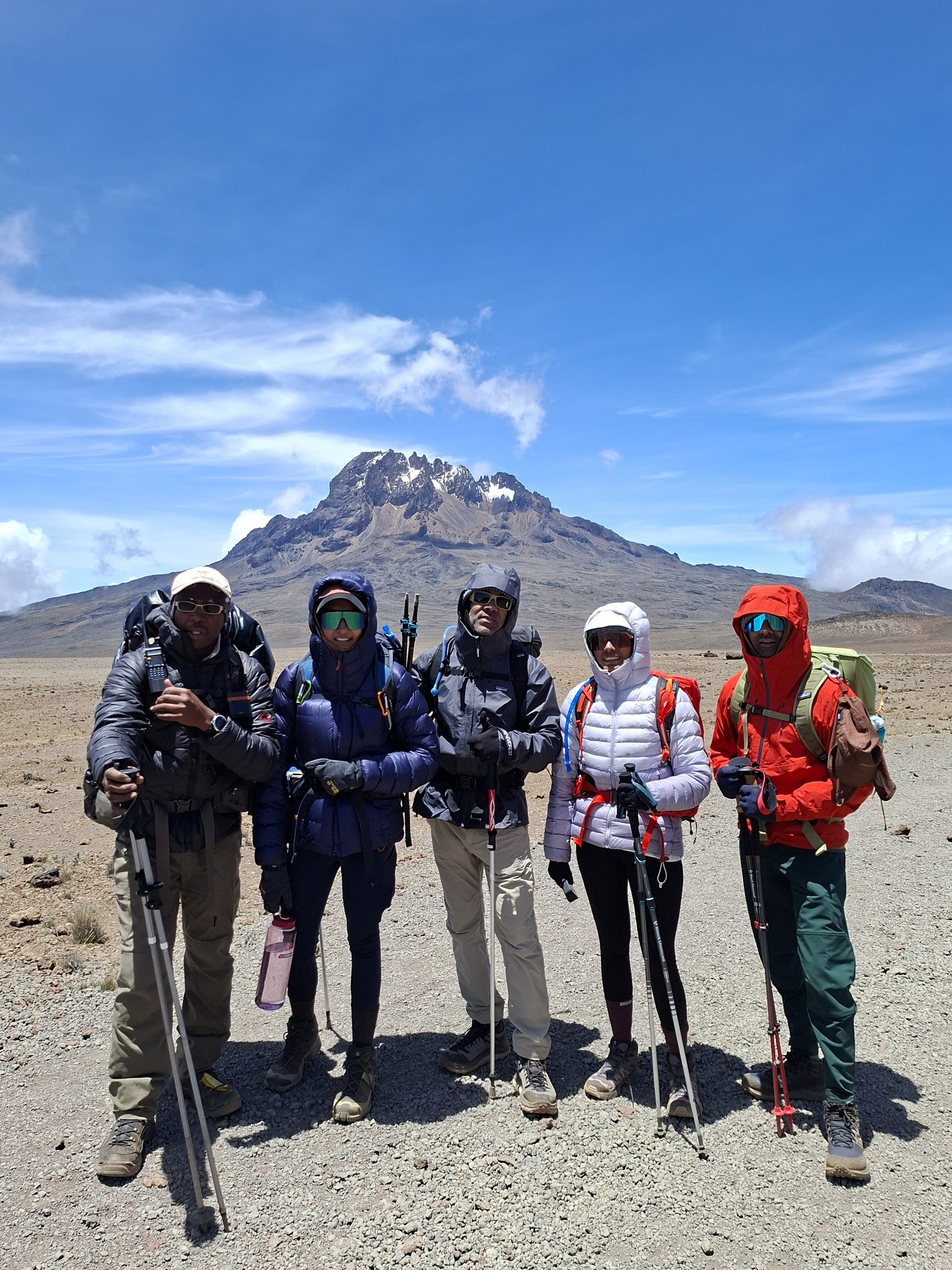
A climb for four people can involve a team of fifteen. Most climbers never learn what half of them do. Here is who they are, what they carry, how much to tip, and how to make sure the money gets to them.
There is a moment on most climbs when someone works out that the tent was already up when they arrived, that the water was boiled, that somebody carried the toilet, and that all of it happened while they were walking slowly uphill thinking about their own legs.
Kilimanjaro runs on porters. Not on guides, not on operators, and certainly not on websites. So this post is partly a tipping guide and partly an introduction to the people you are about to spend a week with.
The senior guide runs the expedition and carries responsibility for your safety, the pace, and the daily decisions about who goes higher. Assistant guides are added according to how many climbers are in the group, so nobody is walking alone and one person turning back never strands the rest.
A cook and an assistant cook produce every meal on the mountain, and hot lunch or tea before you reach camp. Waiters serve the food, bring hot drinks on the trail, lay the mess tent, and will bring a drink to your tent if you are too flattened to come out. Camping masters go ahead of you, pick the ground, and have the camp standing before you walk into it, then take it all down the next morning after you leave.
A toilet helper sets up and maintains the private mobile toilet, and the shower if you have booked one. Dishwashers keep every pot and plate sanitised, which is unglamorous and is also why our climbers rarely go down with a stomach bug. On groups above seven climbers a dedicated crew cook joins, whose only job is feeding the crew properly so they can keep working.
Then there are summit porters, the experienced ones who come up with you on summit night. If you falter above 5,000 m, they are the arm that appears under yours.

We recommend $250 to $300 per climber for the whole crew, for the whole climb. That is one pooled amount shared across everyone above, not a figure per person per day.
Nothing about it is fixed. Tip more if the crew was exceptional, or if you want to, and plenty of climbers do once they have watched a porter pass them for the fifth day running carrying twice the weight. Tip less if the service genuinely was not there. What matters is that you plan for it before you arrive, because it is a real part of the cost of climbing this mountain, not a rounding error at the end.
Bring it in cash, brought into Tanzania with you. There is no cash machine at Barafu, and US dollar notes need to be printed after 2009 to be accepted anywhere in the country.
Tips are handed over at the certificate ceremony in Moshi at the end of your climb. Everyone is there, the money goes directly from you to the crew, and you get to thank people by name.
There is a reason we do it in the open. In this industry tips are one of the easier things to quietly take a cut of, either by collecting them centrally and passing on less, or by converting currency at a rate that favours the office. Handing the envelope over in front of the whole crew makes that impossible, and it costs us nothing to be transparent about a thing that was never ours.

Tipping only works as a bonus if the underlying wage is fair to begin with. Where it is not, tips quietly become the wage, and the climber ends up subsidising the operator's margin without knowing it.
We pay the rates set at the annual meetings of the porter, cook and guide associations, which is the closest thing this industry has to an agreed standard. We are among a minority of companies that do. That is also why our prices are not the lowest you will find, and it is the honest answer when somebody asks why a cheaper quote exists, which I have written about in what a climb really costs.
If you are comparing operators, ask two questions: what do you pay your porters, and how are tips distributed. The answers, and how quickly they come, tell you most of what you need to know. There is a longer list on the choosing an operator page.
Learn a few words of Swahili. "Asante sana" for thank you, "poa" for cool or fine, and "pole pole" you will hear a hundred times a day anyway. Learn the names of the people who bring your food. Ask the porters where they are from, because most are from villages on these slopes and many have summited more times than any client ever will.
Kit is welcome too. Boots, gloves, fleeces and headlamps you are not taking home get used hard by people who work up here every week. Hand them over at the ceremony rather than leaving them at the hotel.
Climbers remember summit morning. In my experience they remember the crew longer.
Fairly paid, properly fed, and the same team from the gate to the summit and back. Ask Nelson anything about who will be walking with you.