Climb Mount Meru.
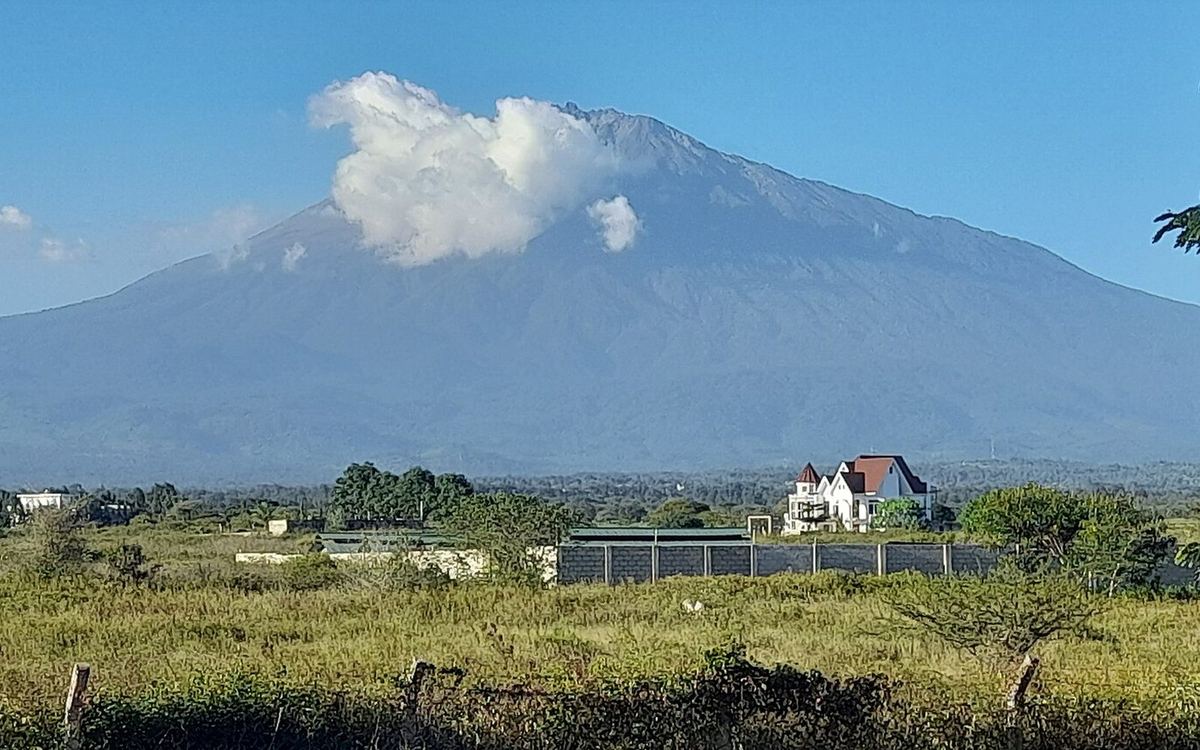
At 4,566 m, Mount Meru is Tanzania's second-highest mountain and the finest acclimatisation climb before Kilimanjaro. A walking safari through the forest, nights in proper mountain huts, and a narrow dawn ridge to Socialist Peak. Wilder, quieter, and more technical than its famous neighbour.
1. Why Climb Mount Meru
Mount Meru stands at 4,566 m (14,980 ft) inside Arusha National Park, the second-highest peak in Tanzania and the fifth-highest in Africa. It is forever in Kilimanjaro's shadow, and that is exactly its appeal. Fewer trekkers, richer wildlife, and a summit ridge that asks more of you than any single day on Kilimanjaro.
There is one official route, the Momella Route, and it starts low in tropical forest where buffalo and giraffe browse the trail. Because you are inside a live wildlife park, an armed ranger walks with every group, which turns the first day into a genuine walking safari. Higher up the forest gives way to giant heather, alpine moorland, and finally a stark volcanic ash cone with the breached crater dropping away beside you.
The best warm-up for Kilimanjaro there is. Meru and Kilimanjaro sit only 70 km apart. Climb Meru first and your body arrives at Kilimanjaro already adapted to altitude, which measurably lowers your risk of altitude sickness on the big mountain. Most climbers who pair the two allow a rest day in between. Talk to Nelson about a combined Meru and Kilimanjaro package.

2. How Hard Is It
Meru is moderately challenging, and honest climbers will tell you the summit day is more technical than Kilimanjaro's. The trail is steep, and the final approach follows a narrow, exposed ridge with steep drop-offs on both sides, walked in the dark by headlamp with some easy but unsecured scrambling near Rhino Point. No ropes or technical climbing gear are needed, but you do need a head for heights, solid hiking fitness, and the stamina for a summit day of 12 to 15 hours on your feet. Trekking poles are strongly recommended for the long descent.
3-Day or 4-Day Momella Route
The four-day climb is the one we recommend for almost everyone. The three-day climb is for fit, well-acclimatised trekkers who are short on time and happy to take on a very long final day.
The 4-Day Climb Recommended
Four days, three nights • Momella Route • nights at Miriakamba and Saddle Huts
Day 1: Momella Gate to Miriakamba Hut (2,514 m). Morning transfer from Moshi to the park gate for registration, then a 10 km walk (4 to 5 hours) through open savannah and tropical rainforest with your armed ranger. Giraffe, zebra, buffalo, and colobus monkeys are common. First night in the wooden huts.
Day 2: Miriakamba Hut to Saddle Hut (3,560 m). A steeper 7 km (3 to 4 hours) through mossy montane forest, past Elephant Ridge (Mgongo wa Tembo, 3,200 m) with its view into the breached crater. After lunch there is an optional acclimatisation hike up Little Meru (3,820 m) for panoramic views across to Kilimanjaro. Early dinner before the midnight start.
Day 3: Summit Socialist Peak (4,566 m), descend to Miriakamba. Away around 2:00 AM by headlamp across the alpine desert to Rhino Point and along the crater ridge, timed to reach Socialist Peak at sunrise behind Kilimanjaro. The long descent returns to Saddle Hut for lunch, then down to Miriakamba. The hardest day: 12 to 14 hours and 19 km in total.
Day 4: Miriakamba Hut to Momella Gate. An easy 13 km descent (2 to 3 hours) on the Northern Route, with one more chance at the park's wildlife. Summit certificates at the gate, then transfer back to your hotel in Moshi or Arusha.
| Day | Segment | Elevation | Distance | Time |
|---|---|---|---|---|
| 1 | Momella Gate to Miriakamba Hut | 1,500 to 2,514 m | 10 km | 4 to 5 hrs |
| 2 | Miriakamba Hut to Saddle Hut | 2,514 to 3,560 m | 7 km | 3 to 4 hrs |
| 3 | Saddle Hut to Socialist Peak to Miriakamba | 3,560 to 4,566 m | 19 km | 12 to 14 hrs |
| 4 | Miriakamba Hut to Momella Gate | 2,514 to 1,500 m | 13 km | 2 to 3 hrs |
The 3-Day Climb
Three days, two nights • Momella Route • for fit, well-acclimatised trekkers
Day 1: Momella Gate to Saddle Hut (3,560 m). A continuous 17 km ascent over 7 to 8 hours, straight through the forest and past Miriakamba to Saddle Hut. A big first day that needs real fitness.
Day 2: Summit Socialist Peak (4,566 m), descend to Miriakamba. The 2:00 AM start to Rhino Point and the ridge, sunrise on the summit, then the long descent to Miriakamba Hut. 12 to 14 hours and 19 km.
Day 3: Miriakamba Hut to Momella Gate. The easy 13 km walk out (2 to 3 hours), certificates at the gate, and the transfer back to Moshi or Arusha.
We are honest about this one: the compressed schedule makes for a hard trek, and the four-day climb gives you better acclimatisation and a far more enjoyable mountain. Choose the three-day only if time is tight and your fitness is strong.
3. What Is Included
- WFR-certified guides. Professional mountain guides trained in Wilderness First Response, led by the Go Kilimanjaro Treks team or by Nelson Mushi himself.
- Armed park ranger with the group throughout, as required in Arusha National Park.
- All park fees. National park entrance and permit fees for Arusha National Park.
- Sleeping huts. Bunk accommodation in the wooden huts at Miriakamba and Saddle.
- Government taxes included in the package.
- Advanced first aid and oxygen. Emergency medical supplies and bottled oxygen for altitude support.
- Crew wages. Fair pay for all support staff, porters, and kitchen crew.
- All meals across the whole trek, freshly prepared on the mountain.
- Transport. Hotel pickup in Moshi, transfer to Momella Gate, and the return transfer to Moshi or Arusha at the end.
Mount Meru and Kilimanjaro share the same safety systems. Our full approach, including the Two-Hour Assessment Protocol, pulse oximetry, oxygen, and evacuation procedures, is on the Safety & Rescue page.
4. Pricing
All prices below are per person and cover everything in the included list above: WFR-certified guides, the armed park ranger, all Arusha National Park fees and government taxes, hut accommodation, all meals, oxygen and first aid, crew wages, and the hotel transfers to and from Momella Gate. The more climbers in your group, the lower the price per person.
Not included: international and domestic flights, travel and medical insurance, personal trekking gear, tips for the crew, alcoholic drinks, and souvenirs. Airport transfers are available at $60 per transfer each way. Groups of six or more receive a discount, so ask Nelson for a group quote.
Mount Meru Trekking FAQ
How hard is it to climb Mount Meru?
Mount Meru is a moderately challenging trek, and many experienced hikers find it more technically demanding than Kilimanjaro. The trail has steep ascents and a narrow, exposed summit ridge with steep drop-offs. You need a good baseline of hiking fitness, a head for heights, and the endurance to manage a 12 to 15 hour summit day.
Is Mount Meru a good warm-up for Kilimanjaro?
Yes. Mount Meru is widely considered the perfect acclimatisation climb before Kilimanjaro. The two peaks are only 70 km apart, so climbing Meru first exposes your body to altitudes up to 4,566 m and significantly reduces your risk of altitude sickness on Kilimanjaro. The steep, technical nature of Meru also builds real physical confidence.
How long does the Mount Meru trek take?
The standard and most recommended itinerary is four days and three nights. A three-day option exists for fit, well-acclimatised trekkers, but it compresses the descent into an exceptionally long final push, so we only recommend it in specific cases.
What is the route up Mount Meru?
There is only one official route up and down Mount Meru, the Momella Route. It begins at Momella Gate on the eastern side of the mountain and climbs along the northern edge of the crater to Socialist Peak (4,566 m).
Why do I need an armed ranger on Mount Meru?
The lower slopes of Mount Meru sit inside Arusha National Park, an active wildlife zone. An armed park ranger accompanies every trekking group to keep you safe around buffalo and elephants, which turns the lower forest into a genuine walking safari.
Where do trekkers sleep on Mount Meru?
Unlike most Kilimanjaro routes, Mount Meru uses permanent wooden mountain huts, so you do not carry a tent. You sleep at Miriakamba Hut (2,514 m) and Saddle Hut (3,560 m). The huts are basic but clean, with dormitory bunk rooms, communal bathrooms, and mess halls. A warm sleeping bag is still essential.
When is the best time to climb Mount Meru?
Mount Meru can be climbed year-round, but the dry seasons are safest and most comfortable. The main season runs June to October with cool, stable weather. A second window from December to February is slightly warmer with clear skies and the best views of Kilimanjaro. Avoid the heavy rains of April to May and November, when the steep trails become slippery and dangerous.
What wildlife will I see on Mount Meru?
The lower slopes are a walking safari. Common sightings include buffalo, giraffe, zebra, warthog, and antelope such as Harvey's red duiker and dik-dik, plus black-and-white colobus and blue monkeys in the forest canopy. Elephant and leopard are present but rarely seen.
Meru First, Then the Roof of Africa.
Climb Mount Meru on its own, or use it to arrive at Kilimanjaro already acclimatised and confident. Tell Nelson your dates and he will build the package around you.