Diamox is the brand name for acetazolamide, a prescription medication originally developed for glaucoma and now widely used by mountain climbers as an aid to high-altitude acclimatization. It is one of the most common questions Nelson gets in the pre-trek briefing.
This post explains what Diamox actually does, who benefits from taking it, what side effects to expect, and the situations where it does not help. Important note up front: this is informational, not medical advice. Discuss with your doctor or a travel medicine specialist before deciding whether to take Diamox.
What Diamox does
At altitude, your body has to make a chemical adjustment. The thinner air means less oxygen per breath. Your body responds by breathing faster and producing more red blood cells. But that faster breathing causes you to exhale more carbon dioxide than usual, which shifts the chemistry of your blood toward alkaline. The body normally corrects this by having the kidneys excrete more bicarbonate, which takes 24-48 hours.
Acetazolamide speeds up that kidney process. It is a diuretic that triggers the kidneys to excrete bicarbonate faster, restoring blood acidity to normal sooner. The practical effect: your body acclimatizes faster than it would naturally. You are not getting more oxygen, you are just adjusting more efficiently to the oxygen you have.
Who benefits from Diamox
- Climbers on shorter itineraries (Marangu 5-6 day, 7-day Machame). The shorter the climb, the less time the body has to acclimatize naturally, and the more value Diamox provides.
- Climbers with a history of altitude sickness on previous trips.
- Climbers ascending faster than they would naturally choose due to time constraints.
- Climbers crossing 3,500 m within 24 hours of arrival from sea level.
Who probably does not need Diamox
- Climbers on a 9-10 day Northern Circuit or 8-day Lemosho with the slow climb-high-sleep-low pattern built in. The itinerary itself does most of the acclimatization work.
- Climbers with prior successful Kilimanjaro climbs without Diamox.
- Climbers with successful high-altitude trekking history (4,000+ m peaks) without Diamox.
That said, many climbers take Diamox prophylactically even on longer routes as additional insurance against acute mountain sickness. There is no penalty for taking it on a long route. It just provides marginal rather than dramatic benefit.
Standard dosing
The most common prescribed dose is 125 mg twice a day, starting one day before ascending above 2,500 m and continuing through the climb until you descend below that altitude. Some doctors prescribe 250 mg twice a day, which is also effective but tends to produce more pronounced side effects.
The dose and timing are your doctor's call. Discuss with your doctor in the months before your climb. Many doctors are unfamiliar with high-altitude trekking and may not prescribe Diamox readily. A travel medicine specialist is more likely to have direct experience.
What Diamox feels like
Side effects are common and usually mild. The most frequent:
- Tingling in fingers, toes, lips, and face. This is the classic Diamox sensation. It is harmless and goes away within hours of stopping the medication.
- Increased urination. Diamox is a diuretic. You will pee more. Drink extra water to compensate.
- Altered taste, especially with carbonated drinks. Beer and Coke taste strange on Diamox. Brief and harmless.
- Tiredness or general malaise. Less common but possible.
- Allergic reaction in people with sulfa drug allergies. Discuss with your doctor if you have a sulfa allergy.
What Diamox does not do
Diamox accelerates acclimatization. It does not eliminate altitude sickness. Climbers on Diamox can and do develop acute mountain sickness, HAPE, and HACE. The descent rule still applies: if you develop severe symptoms, descend immediately regardless of medication.
Diamox is also not a substitute for a sensible itinerary. A 5-day Marangu on Diamox still has a lower success rate than an 8-day Lemosho without Diamox. The biology of acclimatization needs time, not just chemistry. Pick the right route and use Diamox if appropriate, not the other way around.
Alternatives
Some climbers explore alternatives:
- Ginkgo biloba: evidence is mixed; some studies suggest mild benefit.
- Ibuprofen: useful for altitude headache but does not prevent acclimatization issues.
- Dexamethasone: a steroid sometimes used by mountaineers and reserved for emergency descent. Not for prophylaxis without specialist consultation.
- Hydration and slow ascent: the most reliable acclimatization strategies of all, regardless of medication.
The bottom line
Diamox is a well-studied, effective tool for speeding altitude acclimatization. It is most valuable on shorter itineraries. It has manageable side effects most climbers tolerate without issue. It is not a substitute for choosing a proper itinerary or for the descent rule when severe symptoms develop.
Discuss with your doctor or a travel medicine specialist. If they prescribe it, test at home before flying. Bring it on the mountain. Use it according to your doctor's instructions. Tell your guide on the climb that you are taking it.
For the full picture of how we manage altitude on every climb, including the two-hour assessment protocol and emergency oxygen ratios, read our Safety and Rescue page.
Frequently asked questions
Can I buy Diamox without a prescription in Moshi?
Yes, Diamox is available without prescription in many Tanzanian pharmacies. We do not recommend this path. Buying it without a doctor's consultation means you are taking the medication blind to your own contraindications, dosage, and timing. Discuss with your doctor before flying.
Does Diamox affect my ability to drink water?
Diamox is a diuretic, so you will urinate more. The recommended response is to increase water intake, not reduce it. The full daily hydration target on Kilimanjaro is 3-4 litres, with Diamox or without.
Will I get the tingling sensation?
Most climbers do at some level. It is harmless and goes away after you stop the medication. If the sensation is severe or paired with other symptoms, talk to your guide.
Related posts
How Cold Does Kilimanjaro Actually Get?
Tropical heat at the gate, -20 C at the summit. Five distinct climate zones, each with its own dress code. Here is what to expect by altitude.
What Summit Night on Kilimanjaro Actually Feels Like
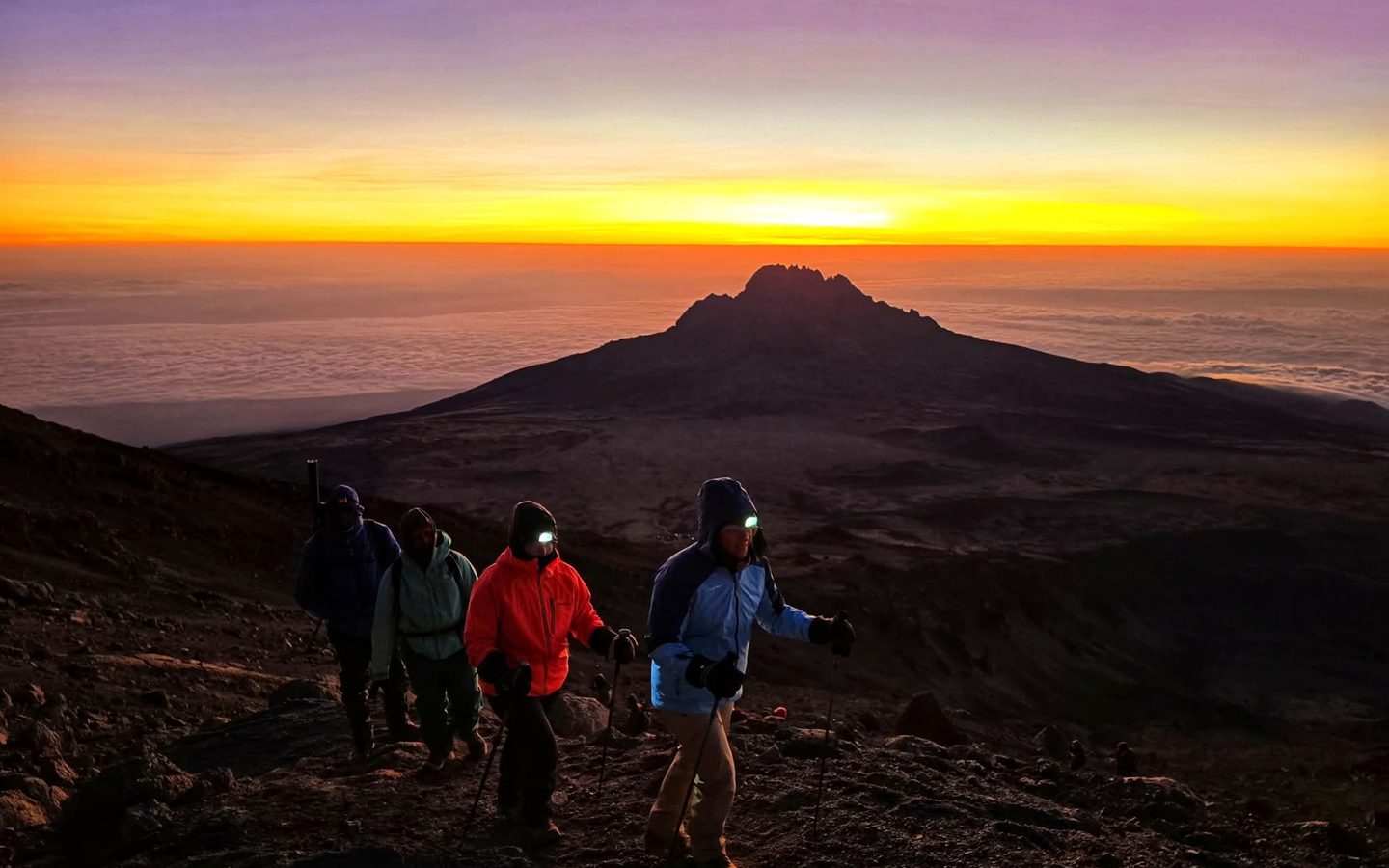
Eleven PM wake-up. Eight hours of cold dark ascent. Sunrise on the crater rim. The honest hour-by-hour account.
How Fit Do You Need to Be to Climb Kilimanjaro?
You don't need to be an elite athlete. You do need a solid cardio base and multi-day endurance under a loaded pack. Here is the honest benchmark.