One of the strangest things about Kilimanjaro is the temperature range you experience in a single week. You start in the tropical rainforest at the base, sweating in shorts and a t-shirt. Six days later you are on the summit at -20 C, wearing every layer you own. This is one of the few places on earth where you can climb from equatorial heat to arctic cold without travelling more than 60 km.
This post breaks down the real temperature ranges on Kilimanjaro by climate zone, why summit night gets so cold, and what clothing actually keeps you warm.
The five climate zones
Kilimanjaro passes through five distinct climate zones from base to summit. The transitions between them are some of the most striking features of the climb.
Cultivation zone (800-1,800 m)
Daytime: 22-28 C. Night: 14-18 C. Below the park boundary. Coffee farms, banana groves, Chagga villages on the lower slopes. Warm and humid year-round. Not where you do most of your hiking, but where you start.
Montane rainforest (1,800-2,800 m)
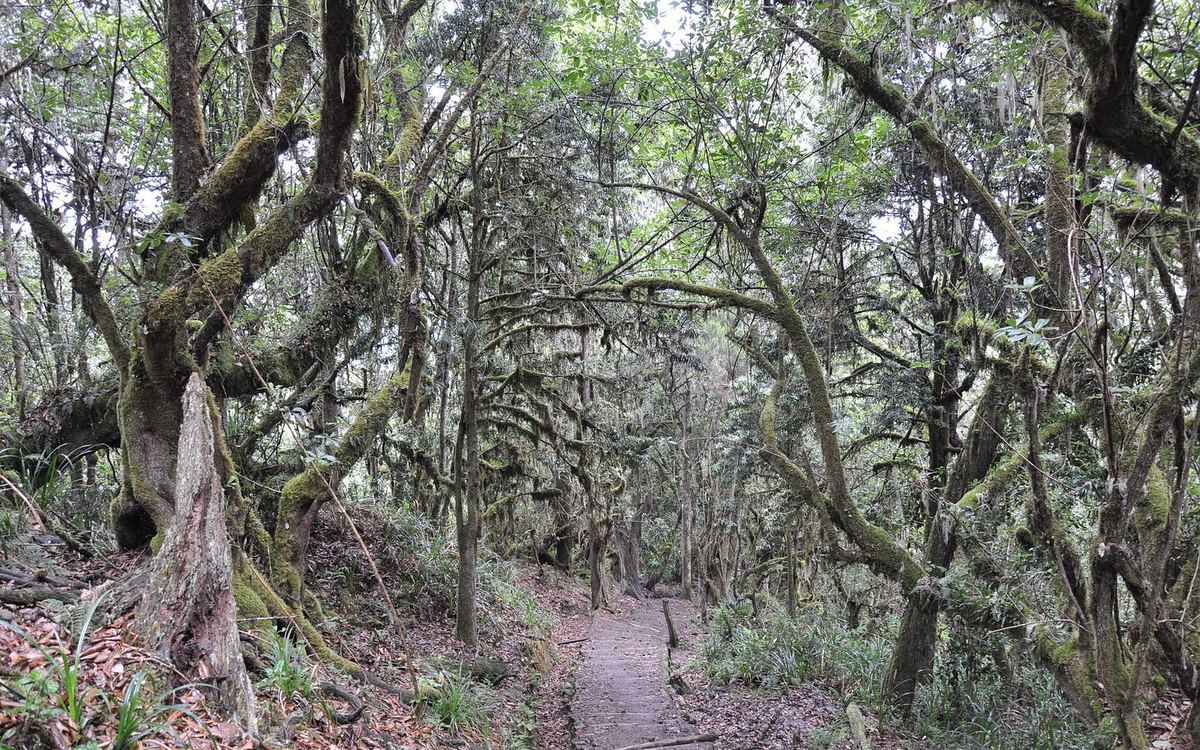
Daytime: 18-24 C. Night: 10-14 C. This is where most routes begin. Dense forest, vines, colobus monkeys, frequent rain showers, high humidity. Trekking layers: lightweight shirt, light rain shell, hiking pants. You will get wet from rain or sweat in this zone. Quick-dry clothing matters.
Heath and moorland (2,800-4,000 m)
Daytime: 12-20 C. Night: 0-6 C. The air thins, the forest opens up, giant heathers and tussock grasses take over. Days can be warm in direct sun, evenings dip near freezing. Light fleece for evenings, base layers under hiking pants. Shira Camp and Barranco Camp sit in this zone.
Alpine desert (4,000-5,000 m)
Daytime: 4-15 C in sun. Night: -5 to -10 C. Stark, rocky, very little vegetation. The temperature swings are dramatic between sun and shade. Heavy fleece during the day, full insulation at night. Karanga Camp, Barafu Camp, Kibo Hut sit in this zone.
Arctic summit zone (above 5,000 m)
Daytime: -5 to 5 C. Night and summit night: -15 to -25 C with wind chill driving it lower. Glacial ice fields, volcanic rock, intense UV from the thin atmosphere. You are wearing every layer you brought. This is also where summit night happens.
Why summit night gets so cold
Three reasons combine on summit night:
- You are climbing at 5,000-5,895 m where the air is thin and cannot hold much heat.
- You start at midnight when the air is at its coldest before dawn.
- You are walking slowly, which means your body is generating less metabolic heat than it would in a fast-paced workout.
Wind on the summit can drive temperatures 5-10 C lower in apparent cold. A clear, calm summit morning might feel like -15 C. A windy summit morning can feel like -30 C. Frostbite is a real risk on fingers, toes, nose, and ears. This is why we are obsessive about extremity protection.
What actually keeps you warm
The cold answer is layers and the right materials. The detailed answer is on our Packing List. The short version:
- Base layers: merino wool or synthetic. Moisture-wicking. Never cotton.
- Mid-layer: heavy fleece or light puffy.
- Insulation: heavy down or synthetic puffy rated to -15 C.
- Shell: hardshell jacket and pants, waterproof and windproof.
- Hands: liner gloves plus heavy insulated outer gloves rated to -20 C.
- Head: wool beanie, balaclava or buff covering the face.
- Feet: insulated hiking boots, thick wool socks, sock liners.
Water bottles freeze, by the way
One thing that catches most first-timers off guard: water freezes on summit night. Your camelbak hose freezes solid within 30 minutes of starting. The solution is twofold. First, switch to wide-mouth Nalgene-style bottles for summit night and keep them inside your jacket against your body. Second, hot water in those bottles before you leave camp lasts longer before freezing.
If you have a hydration bladder, blow back into the hose after every sip to push water out and reduce freezing in the line. Some climbers use insulated hose covers. Practical, but they still freeze faster than the wide-mouth bottle method.
When it rains at altitude
Rain in the rainforest zone is regular and expected. Rain or snow in the upper zones is less common but possible, especially in shoulder months. Sleet and snow flurries at altitude are some of the more beautiful weather conditions on the mountain. They are also a hypothermia risk if you are not protected. Hardshell layers go on before they need to, not after you are wet.
For the best climbing seasons and how weather varies by month, read our companion post: Best Month to Climb Kilimanjaro.
The bottom line
Kilimanjaro is one of the few places where you experience tropical heat and arctic cold in the same week. The cold is most extreme on summit night, where temperatures regularly hit -15 to -25 C with wind chill driving them lower. Protect extremities, layer properly, keep water from freezing, and trust your guides on when to add layers.
The mountain is climbable in any weather we run climbs in. The difference between miserable and successful is having the right kit and using it before you actually need it.
Frequently asked questions
Is there snow on Kilimanjaro year-round?
Yes, at the summit. The remaining glaciers (Furtwangler, Northern Ice Field, Heim area) hold ice year-round. Snowfall throughout the year on the summit, with seasonal variation in how much accumulates and how long it stays.
Can I climb in winter clothing from my home country?
Standard ski wear is generally inadequate for summit night. The combination of thin air, very low temperatures, and wind requires specialist insulation rated to -20 C minimum. A North Face or Patagonia heavy down jacket meant for ski resorts may not be warm enough for summit night.
How cold is Crater Camp?
Crater Camp (5,729 m) on the western variants sees daytime temperatures of -5 to 5 C and night temperatures of -15 to -25 C. It is the coldest sleeping altitude on Kilimanjaro and is only used by specific itineraries.
Related posts
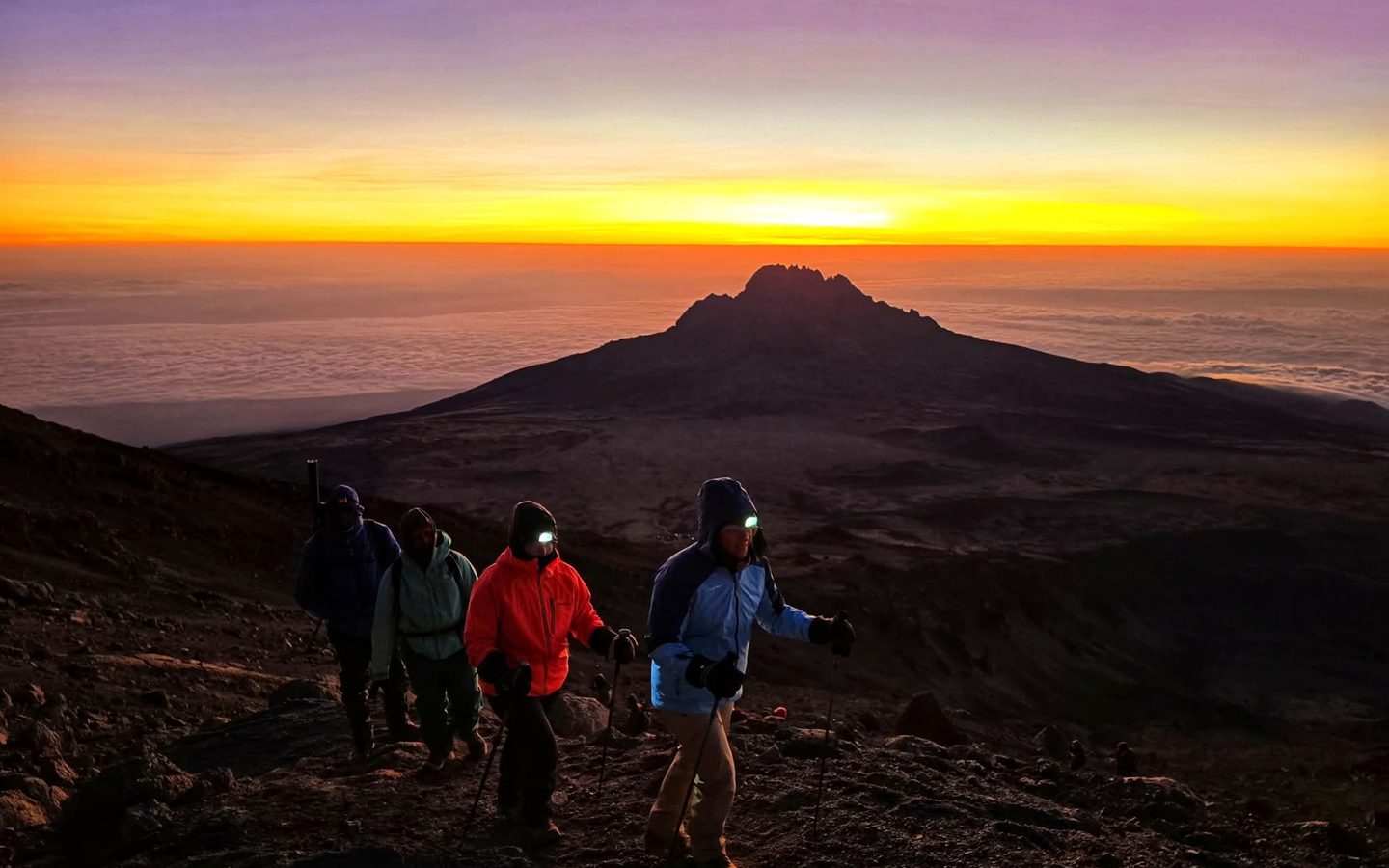
What Summit Night on Kilimanjaro Actually Feels Like
Eleven PM wake-up. Eight hours of cold dark ascent. Sunrise on the crater rim. The honest hour-by-hour account.
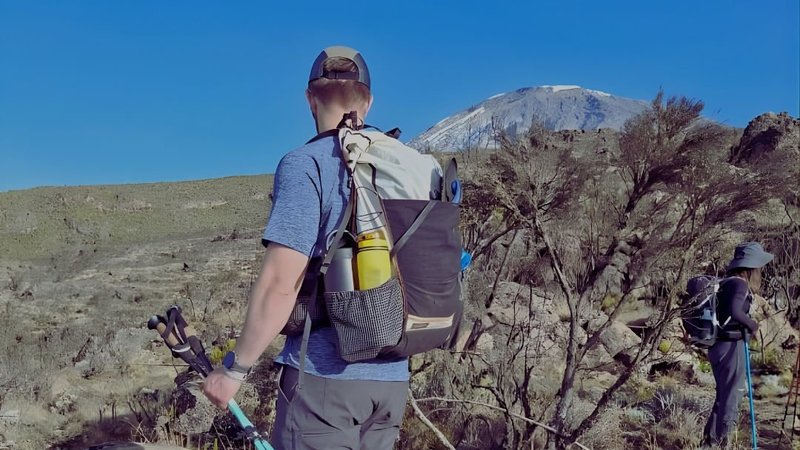
When Is the Best Month to Climb Kilimanjaro?
January-March and June-October are the two dry windows. Each has its own personality. Here is the honest month-by-month breakdown.
How Fit Do You Need to Be to Climb Kilimanjaro?
You don't need to be an elite athlete. You do need a solid cardio base and multi-day endurance under a loaded pack. Here is the honest benchmark.