
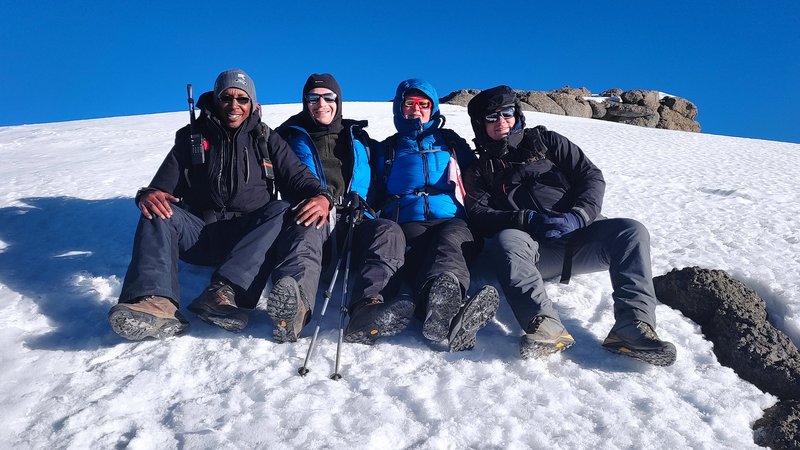
Spend a day on Kilimanjaro and you will hear two words constantly: pole pole. Said by guides, sung by porters, repeated by climbers to each other on the trail. The phrase means "slowly, slowly" in Swahili, but on the mountain it is more than a pacing instruction. It is a philosophy.
This post is about what pole pole actually means, why it works on Kilimanjaro when speed and power do not, and how to practice it long before you arrive in Tanzania.
What pole pole literally means
Pole (pronounced poh-LAY) is the Swahili word for "slowly" or "carefully" or "easy." Repeating it (pole pole) intensifies the meaning. The closest English equivalent is "take it easy" or "slow and steady" but neither carries the full weight of the Swahili.
On Kilimanjaro it is part instruction, part encouragement, part shared cultural understanding. When a guide says pole pole, they are telling you to slow your pace. When a porter passes you on the trail with a 20 kg load and says pole pole, they are wishing you a good climb and reminding you to take your time. When you say pole pole to another climber, you are part of the mountain culture.
Why slow wins on Kilimanjaro
Altitude is the great leveller on Kilimanjaro. The mountain does not care how strong you are at sea level. It cares about how much oxygen your body can use at altitude. And the physics of breathing at altitude favours the slow climber, dramatically.
Here is what is happening:
- At 5,000 m the air contains roughly half the oxygen of sea level.
- Your muscles need oxygen to do work.
- The faster you move, the more oxygen you need per minute.
- If you outpace what your lungs can deliver, you go into oxygen debt.
- Oxygen debt at altitude triggers the symptoms of acute mountain sickness.
At sea level you can walk fast, run, sprint, recover, and your body keeps up. At 5,000 m, every minute of fast walking costs you oxygen reserves you cannot replenish. The strong sea-level climber who pushes the pace on Kilimanjaro frequently arrives at Barafu Camp depleted and fails the summit attempt 12 hours later.
The climber who walks pole pole conserves oxygen, conserves energy, and arrives at Barafu Camp with reserves intact. Then on summit night, when every reserve matters, they have more of them.
How slow is pole pole?
Slower than feels right. Slower than your normal hiking pace. So slow at altitude that you sometimes feel like you are barely moving forward. That feeling is the point.
A practical way to gauge it: you should be able to hold a normal conversation while walking. If you can only get out single words between breaths, you are walking too fast. Slow down. The guide will set the pace and you should match it exactly.
Some climbers describe pole pole as walking with a meditation rhythm. One step, one breath. One step, one breath. The body settles into a sustainable rhythm that can continue for hours.
The cultural side
Pole pole is also a window into Tanzanian culture. The country runs on a different rhythm than the climber who flew in from a high-pressure office job. Tanzanian culture values patience, conversation, taking the time to do things properly. Pole pole on the mountain is a microcosm of how Tanzanians often approach life.
Climbers who fight this rhythm fight the mountain. Climbers who accept it find that the slow pace becomes meditative, contemplative, even peaceful. You see things on the trail you would miss at a faster pace: the giant groundsels in Barranco Valley, the colobus monkeys in the forest, the rock formations changing as the altitude changes, the sky overhead shifting from blue to deeper blue as you climb.
Pole pole. Step by step. The summit comes to those who keep walking.
How to practice pole pole before you fly
Pole pole is a practice. It does not come naturally to most western climbers, who are trained to optimise pace, push through discomfort, and "get there" as fast as possible. Practice it before you arrive.
- On training hikes, deliberately walk slower than you want to. Slow enough to hold a conversation comfortably. Resist the urge to set a faster pace.
- Practice the breath rhythm. Inhale for two steps, exhale for two steps. Or whatever rhythm fits your stride. Build the habit so it is automatic by the time you are on the mountain.
- Train with people slower than you. Walking with someone slower trains the patience that pole pole requires.
- Sit with the discomfort of slow. If you feel impatient walking slow, that's the pattern you need to break. Notice the impatience without acting on it.
The summit night application
Pole pole is most important on summit night. The cold, the dark, the fatigue, the thin air all conspire to make you want to walk faster, generate heat, get this over with. Don't.
The guide's pace on summit night is slower than seems necessary. They are matching the pace to the oxygen environment, not to the climber's emotional state. Climbers who break from the pace and walk ahead almost always run out of reserves before the summit. Climbers who stay with the slow pace almost always make it.
The bottom line
Pole pole is the single most important pacing principle on Kilimanjaro. It is what gets ordinary fit climbers to the summit. It is what keeps strong but impatient climbers from making it. Practice it before you fly. Trust it on the mountain. The summit comes to those who keep walking, not to those who walk fast.
Read our summit night walk-through for the hour-by-hour application of pole pole on the hardest night of the climb.
Frequently asked questions
Will my guide make me walk too slow?
The guide sets the pace to match the altitude and the team. If you genuinely feel the pace is unnecessarily slow at a given moment, you can talk to the guide. But on Kilimanjaro the answer is almost always: the pace is set for a reason. Trust the experience.
Do faster climbers ever make it to the summit?
Some do. But on average, faster climbers have lower summit success rates than those who match the guide's pace. The exception is highly experienced altitude climbers with previous 5,000+ m experience who have learned their own bodies. For first-timers, slow is the right answer.
Is pole pole only for the summit?
It applies the whole way up. The earlier you start practicing it (Day 1 from the gate), the more natural it feels by summit night. Climbers who walk fast in the lower zones to 'save time' typically arrive at Barafu Camp more depleted than climbers who paced themselves consistently.
Related posts
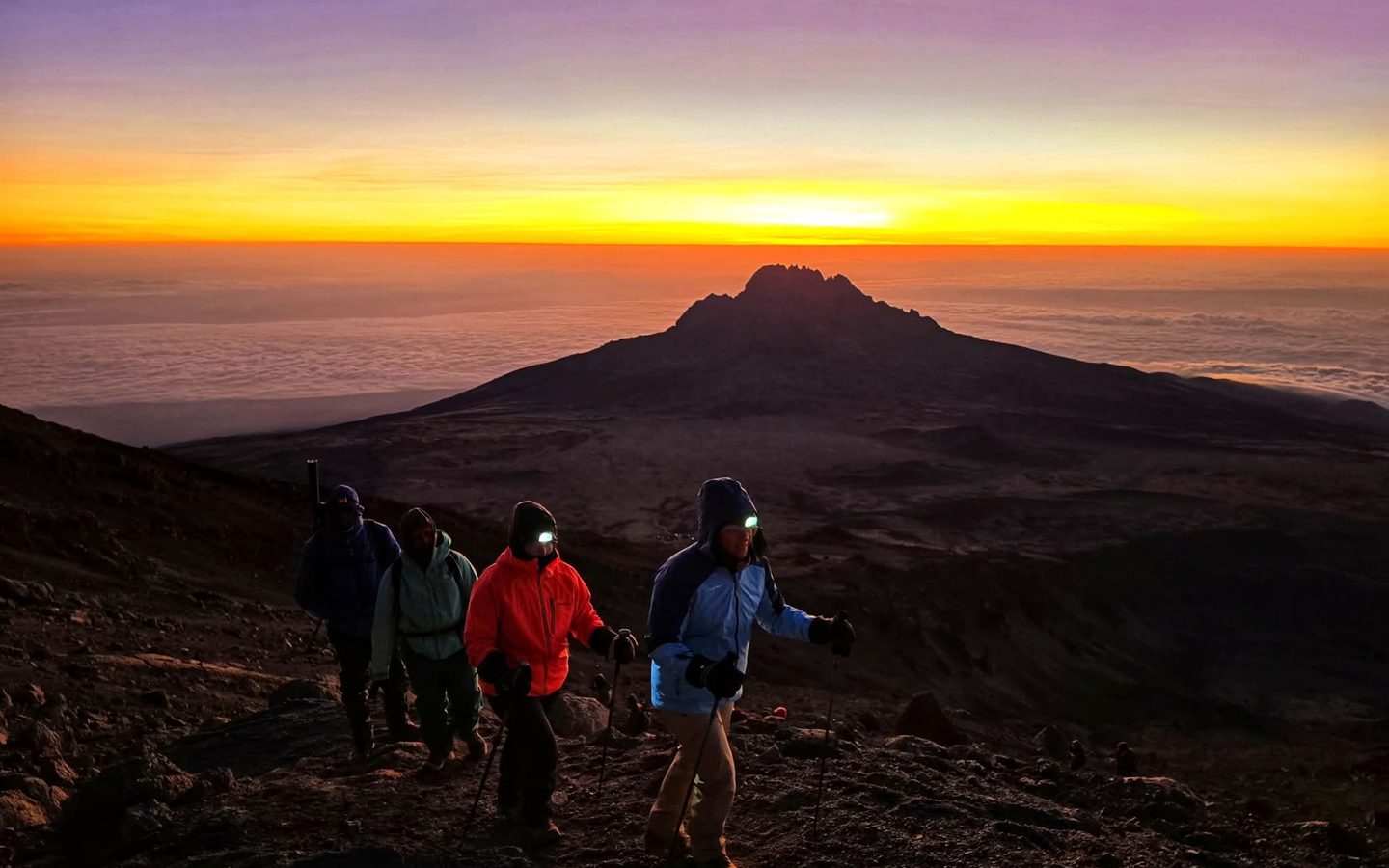
What Summit Night on Kilimanjaro Actually Feels Like
Eleven PM wake-up. Eight hours of cold dark ascent. Sunrise on the crater rim. The honest hour-by-hour account.
How Fit Do You Need to Be to Climb Kilimanjaro?
You don't need to be an elite athlete. You do need a solid cardio base and multi-day endurance under a loaded pack. Here is the honest benchmark.
What Is Diamox and Should You Take It on Kilimanjaro?
Diamox helps your body acclimatize faster at altitude. Here is who benefits, how to take it, what the side effects feel like, and when it doesn't help.